
Spreading Kindness like Confetti
Spreading Kindness Like Confetti ✨
From February 14–20, we celebrate Random Acts of Kindness Week—a reminder that small, simple acts can make a big impact. Whether it’s a kind note, a thoughtful check-in, or a moment of self-compassion, kindness benefits our communities and our own wellbeing. Let’s spread kindness to others—and ourselves—one moment at a time. 💛
This year, we celebrate Random Acts of Kindness Week from February 14-20th. Led by the Random Acts of Kindness Foundation, this week is dedicated to highlighting the powerful impact that small, simple acts of kindness can have.
We all know how good it feels when someone does something kind for us, such as offering help with a chore or offering a thoughtful compliment. But did you know that when we are the ones offering kindness, our brains get a boost of feel-good chemicals and we feel more connected to the people around us? Random acts of kindness benefit both our communities, and ourselves!
Here are some ways that you can practice random acts of kindness:
Leave a positive note for a friend, co-worker, or family member to find
Donate clothes or household items that you no longer need
Listen to someone who needs to vent
Bake a treat for a friend, family member, or neighbour
Compliment someone's hard work
Call or text an old friend to check in
Send or repost a funny meme
Collect garbage that you see on the ground while you're out and about
Hold the door open for someone
As we focus on spreading kindness to others, it's also important to remember yourself. Showing compassion to yourself can reduce stress, build resilience, and support overall wellbeing. And remember, self kindness can look different for everyone, there is no “right” way to do it.
Here are a few ways to practice kindness towards yourself:
Make your favourite meal
List all of the things you love about yourself
Allow yourself to take a deep breath and reset
Put down your devices and do something creative
Use positive affirmations
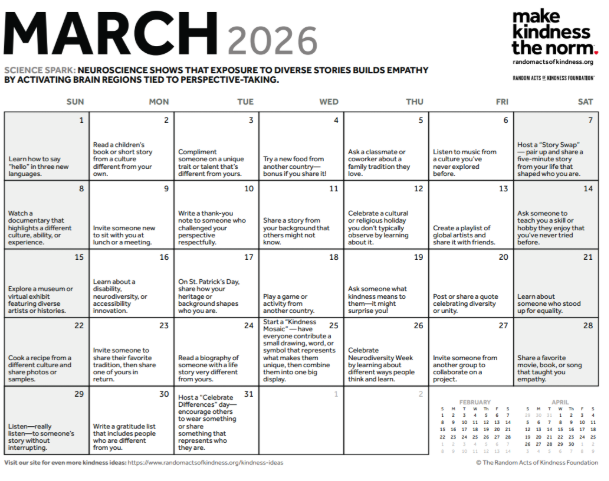
The Random Acts of Kindness Foundation website has monthly kindness calendars to make spreading kindness even easier!

Life Skills Needed for the Holidays (and Tips to Prepare for a Busy Holiday Month)
The holiday season can be exciting—but for many neurodivergent people, it can also bring extra stress. Changes in routine, busy schedules, sensory overload, and social expectations can make this time of year feel overwhelming. Building a few key life skills can help you move through the season with more comfort and confidence.
From planning and time management, to emotional regulation, communication skills, sensory tools, and self-care strategies, small supports can make a big difference. Creating visual schedules, preparing calming tools, setting boundaries, organizing tasks, and protecting rest time all help reduce holiday stress.
With the right strategies and understanding of your needs, the holidays can feel more manageable—and even enjoyable. It’s okay to simplify, set limits, and celebrate in ways that work best for you.
For neurodivergent folks the holiday season can be fun, but it can also be overwhelming—extra social events, changes in routine, travel, sensory overload, and pressure to “be on.” Building a few key life skills can help you move through the season with more confidence, comfort, and control.
1. Planning & Time Management
Why it matters:
Schedules can fill up fast—family gatherings, school or work deadlines, shopping, and errands. Without a plan, everything can pile up and cause stress.
Helpful skills:
Using a calendar or visual schedule system
Setting reminders for tasks, events, and downtime
Breaking big tasks (like shopping or preparing for guests) into small steps
Tips:
Choose one place to keep all your holiday plans—digital or paper, whichever works best for your brain.
Build in “transition time” between events so you can decompress.
Colour-code tasks (ex: red for social events, blue for work/school deadlines, green for self-care).
2. Emotional Regulation
Why it matters:
Crowds, noise, unexpected changes, and social expectations can drain energy quickly. Having tools ready makes it easier to stay grounded.
Helpful skills:
Identifying early signs of overwhelm
Having a “calm-down kit” (noise-canceling headphones, fidgets, sunglasses, etc.)
Practicing self-advocacy and setting boundaries
Tips:
Plan and rehearse scripts like:
“I’m going to step outside for a few minutes.”
“I’m not able to stay long, but I’m happy to stop by.”Schedule rest days after big or socially demanding events.
Permission to leave early is self-care—not rudeness.
3. Social & Communication Skills
Why it matters:
Holidays often include group interactions, conversations, and changes in routines. Having communication tools reduces anxiety.
Helpful skills:
Preparing conversation starters
Being honest about personal needs (“I need a quiet space” or “Can we text instead?”)
Understanding social expectations while honoring your comfort level
Tips:
Make a “social energy budget”—decide how many events you can realistically handle.
Use text or email to communicate boundaries if face-to-face feels too hard.
Plan exits ahead of time (e.g., driving separately, safe rides, or scheduling a check-in call)
4. Sensory Awareness & Coping Strategies
Why it matters:
Holiday environments can be loud, bright, crowded, and full of new smells—often overwhelming for sensory-sensitive people.
Helpful skills:
Identifying sensory triggers
Preparing accommodations
Creating sensory-safe routines
Tips:
Bring your own comfort items: headphones, sunglasses, chewy or crunchy snacks, stim toys.
If hosting, adjust lighting, music, or seating to suit your sensory needs.
At gatherings, locate the quietest spot early in case you need a break.
5. Executive Functioning & Organization
Why it matters:
Shopping, budgeting, gift-wrapping, meal planning—holidays come with a lot of moving pieces. EF supports help keep things manageable.
Helpful skills:
Using checklists and step-by-step plans
Setting spending limits
Preparing tasks in small chunks instead of all at once
Tips:
Try a simple checklist like: gifts, food, travel, outfits, accommodations, schedule.
Automate what you can: delivery, pre-made meals, digital cards, etc.
Keep a “holiday bin” so wrapping supplies, tape, and cards stay in one place.
6. Self-Care & Rest
Why it matters:
The holidays are not a marathon you must push through—they’re a time that can be joyful only if your needs are respected.
Helpful skills:
Recognizing burnout
Prioritizing your needs over others’ expectations
Understanding how your body and brain recover best
Tips:
Protect your sleep schedule—even if everything else changes.
Build in “no plans” days to reset.
Choose traditions that make you feel good, not just the ones others expect.
Final Thoughts
Being neurodivergent doesn’t mean the holidays have to be overwhelming. With the right skills and supports, this season can be comfortable, meaningful, and even enjoyable. Preparation and self-understanding are key—plan what you can, protect your energy, create sensory-friendly spaces, and remember that it’s okay to do the holidays your way.

Time Management Finding Balance When Life Gets Busy
Managing time can feel overwhelming, especially during busy or unpredictable seasons. This post shares three practical, neurodiversity-friendly strategies — visual calendars, breaking tasks into steps, and scheduling downtime — to help reduce stress, support executive functioning, and create balance when life gets hectic.
Change, deadlines, and busy schedules can be stressful — especially for neurodivergent people who thrive on structure and predictability. Whether it’s back-to-school season, midterms, assignment crunch time, or the holidays, managing your time in a way that works for your brain can make all the difference.
Here are three practical, flexible strategies to help you manage your time when things start to pile up:
1. Use a Visual Calendar to See What’s Coming Up
Having a visual overview of your week or month can help reduce uncertainty and last-minute stress.
Try using a digital calendar (like Google Calendar) or a paper planner that’s easy to glance at.
Colour-code your activities — for example, blue for school, green for appointments, orange for social plans, and purple for downtime.
Set notifications that remind you in advance — some people like a reminder the day before, and again an hour before.
If visuals help, use stickers or icons to make the calendar feel more engaging and easier to read.
This helps make time visible, which can support executive functioning and planning ahead — especially during busy or unpredictable times.
2. Break Tasks into Smaller Steps and Use Gentle Reminders
Large tasks like “write essay” or “study for exam” can feel overwhelming or hard to start. Breaking them down can make them more manageable and motivating.
Try turning one big task into smaller pieces, like: “choose topic,” “make notes,” “draft intro,” and “edit final version.”
Set reminders for each smaller step instead of just the final due date.
Consider using a reminder app or task manager like Notion, Tiimo, or Todoist — or even sticky notes in a visible place.
Each completed step gives a sense of progress and accomplishment — which can boost motivation and reduce anxiety.
3. Schedule Downtime and Sensory Breaks
Downtime isn’t a reward — it’s a need.
Schedule rest the same way you schedule work or study time. Put it in your calendar or planner so it becomes part of your routine.
Think about what helps you reset — quiet time, movement, sensory breaks, time outdoors, a hobby, or time with trusted people.
Build in “buffer time” between activities so you’re not rushing from one thing to another.
When your schedule includes moments of rest, you’re more likely to sustain focus, energy, and emotional regulation through busy seasons.
Time management doesn’t have to look one way — it’s about finding systems that support your brain and help you feel more in control. With visuals, reminders, and intentional rest built into your schedule, you can reduce stress, prevent burnout, and make room for both productivity and joy.

Aspire Services Featured by the City of Barrie’s Starter Company Plus Program
Aspire Services founder Becky Kurtz was recently featured by the City of Barrie’s Starter Company Plus Program! Learn how her passion for supporting neurodiverse youth and adults grew into a thriving business helping clients build confidence, independence, and real-life skills across Barrie, Simcoe County, and beyond.
We’re proud to share that Aspire Services and our founder, Becky Kurtz, were recently featured by the City of Barrie’s Starter Company Plus Program — highlighting the journey of building Aspire Services from passion into purpose.
Becky completed the Starter Company Plus program five years ago and has continued to grow Aspire Services ever since, guided by the principles, confidence, and strong business network she developed during her time in the program.
Turning Passion Into Purpose
Becky’s passion for supporting neurodiverse youth and adults started early and evolved into a full career path. Her experience across education, intensive behavioural intervention, and applied behaviour analysis helped her understand the unique needs of individuals at different life stages.
After relocating to Barrie, Becky recognized a clear gap — there were very few services available for adolescents and young adults to continue building life skills. Rather than waiting for change, she created it herself.
“People don’t just stop growing at twelve years old,” Becky shared. “There was almost nothing in place to help teens or young adults develop life skills.”
Empowering Neurodiverse Youth and Adults
Aspire Services focuses on life skills coaching and group programs for neurodivergent teens and adults, both in-person and virtually. The goal is simple yet powerful — to help each person become the best version of themselves by building independence, confidence, and real-life tools for success.
“I want to be someone’s cheerleader,” Becky says. “I’m here to support people and teach them the life skills they need.”
Growing a Business in Barrie
Barrie became the natural home for Aspire Services because the community had a real and immediate need. Over the past five years, Aspire has grown from a solo venture into a full team, expanding group programs, adding virtual offerings, and partnering with national initiatives like EmploymentWorks, a federally funded program designed to help neurodivergent individuals prepare for the workforce.
“At the time, it was just me,” Becky reflected. “Now I have a whole team, and that’s helped me serve more people in more ways.”
Community and Continuous Growth
Community has been central to Becky’s success — from the support of the Small Business Centre to the network built through Starter Company Plus. Even during the challenges of COVID, she stayed connected, finding encouragement and mentorship that continues to shape Aspire’s path forward.
“It’s about finding your own cheerleaders and building a strong network,” she said. “That sense of community has stayed with me.”
Looking Ahead
As Aspire Services continues to grow, so does Becky’s vision — helping neurodiverse individuals build skills that open doors to independence, employment, and a fulfilling life.
We’re incredibly proud to be part of Barrie’s thriving small business community and grateful for the programs and people that helped us get here.
👉 Read the full feature article on the City of Barrie’s website https://www.investbarrie.ca/whats-new/latest-news-updates/becky-kurtzs-passion-grows-company.